

Himile Mechanical Science and Technology (Shandong) Co., Ltd. · Gaomi, Shandong
Himile: define what you are buying.
A complete machine, a rotary unit or a manufactured component needs a different brief and a clearly identified supplier.
Choose the scope ↓Himile RFQ ↗
Official business material and 2025 issuer-report sections reviewed 8 October 2026
Separate the delivered item from the equipment used to make it.
The listed Himile business covers tire moulds, large mechanical components and CNC machine tools. The official machine-tool project also presents rotary units and laser equipment. An enquiry for a new machining centre is different from an enquiry for a casting or a finished component—even if the same wider organisation has equipment relevant to both.
| You need | The useful starting point | Before accepting a quotation |
|---|---|---|
| Complete CNC machine | Part features, fixture, orientation and process | Exact current model, build sheet, spindle/control and machine acceptance |
| Rotary unit or assembly | Host machine interface and loaded fixture sweep | Load/moment limits, control integration, clamping and calibration |
| Manufactured component | Material, blank, drawing and released-part requirements | Responsible plant, process route, inspection and traceability |
Swipe on a phone. These are different procurement scopes; group equipment photographs do not substitute for any of the required documents.
Three names describe different levels of responsibility.
Himile Group
豪迈集团股份有限公司 presents a wider range of industrial businesses and a manufacturing-equipment gallery. Its 1995 group history and shared gallery should not be treated as the legal identity or product catalogue of every affiliate.
The listed mechanical-technology company
山东豪迈机械科技股份有限公司 uses the English name Himile Mechanical Science and Technology (Shandong) Co., Ltd. Its 2025 annual report identifies stock code 002595 and describes tire moulds, large-component casting/finish machining and CNC machine-tool activities.
The CNC machine-tool subsidiary
The same report identifies 山东豪迈数控机床有限公司 as a wholly owned subsidiary at Gaomi. The official CNC project says it began presenting and selling externally in 2022. For a machine or rotary-unit order, specify the actual builder, legal seller and responsible service entity rather than stopping at the Himile brand.
The report’s corporate relationship corroborates entity and business scope at that reporting date. It is not a machine certificate, an independent factory audit or a promise of stock, cycle time or overseas response time.
For a machine, start with access and motion.
The official CNC project presents XHS and XHQ five-axis machining-centre families, precision machining centres and a five-axis laser engraving route for superhard tools. The issuer report separately describes vertical and horizontal multi-axis/turn-mill equipment and direct-drive rotary products. These are family and business references; one current model and its supplied configuration must be identified before numerical comparison.
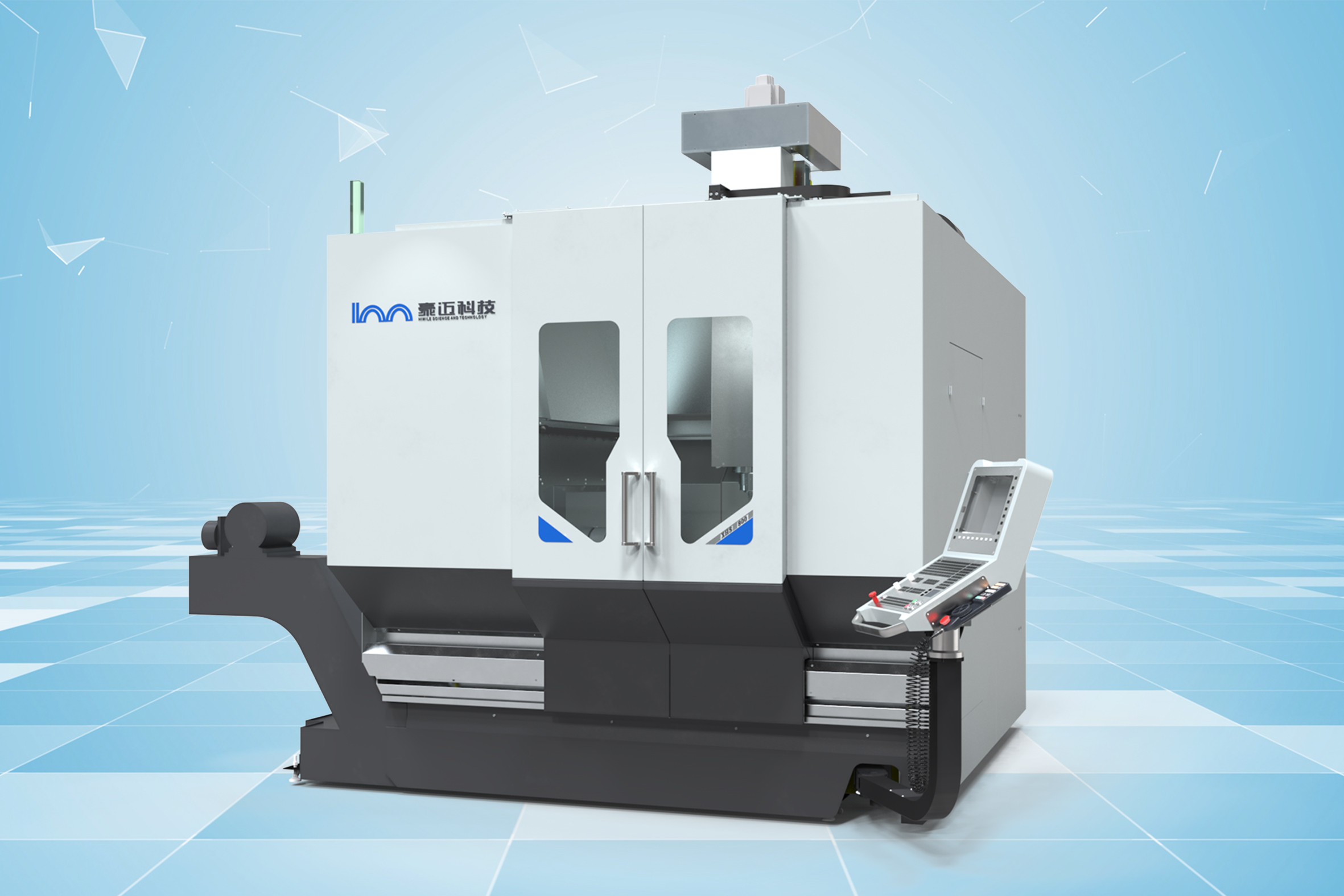
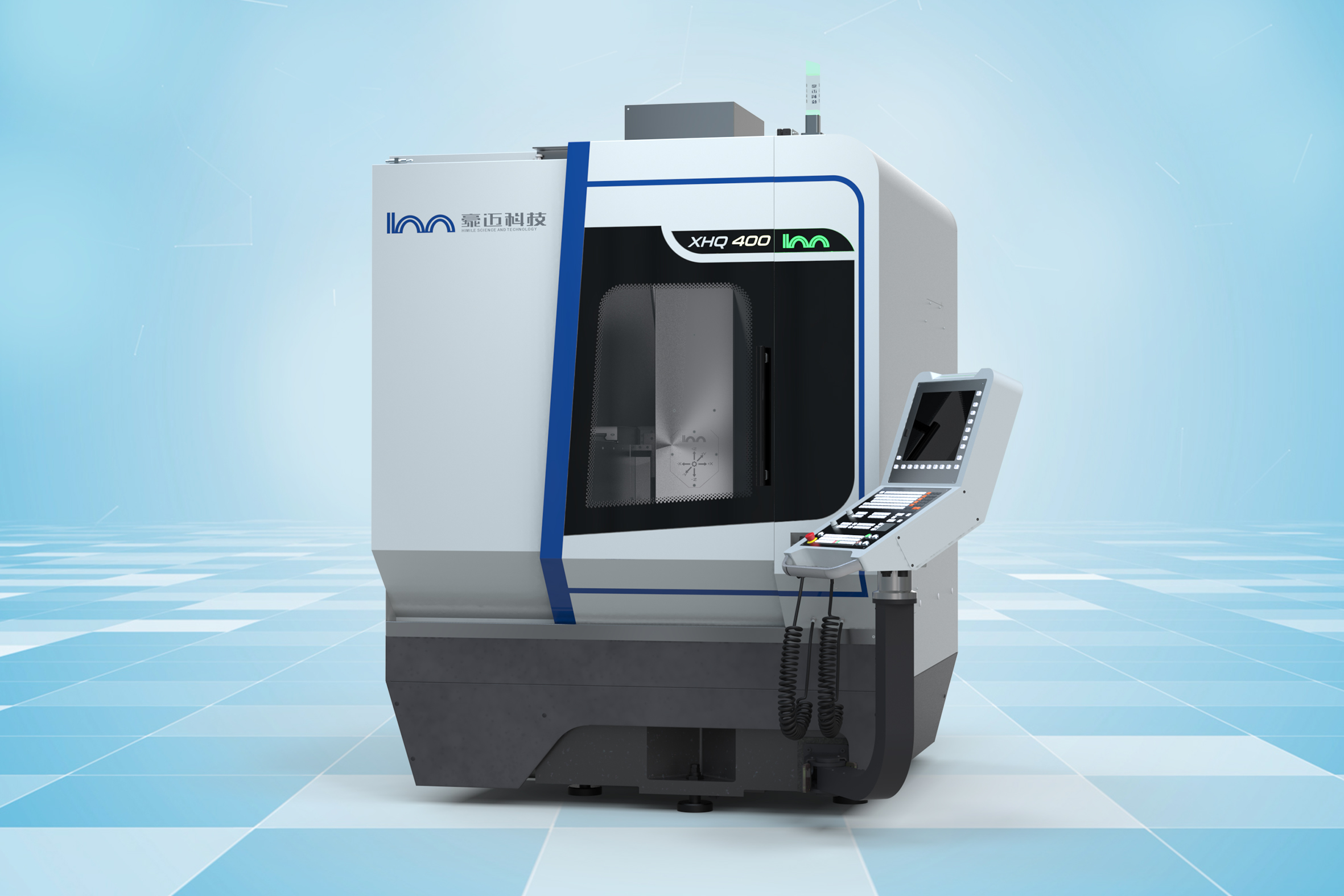
For several indexed faces, draw the datum, clamps and tool approach at each orientation. For continuous five-axis work, add the real CAM path, holders, rotary sweep, centre of gravity and postprocessor/control requirements. If turning and milling are combined, identify the work spindle, milling spindle, workholding and required feature access separately.
Ask for the selected model’s travel, usable fixture envelope, orientation-specific load/moment limits, spindle power/torque duties, interface, magazine occupancy, measurement devices and delivered software. Do not infer these from a family number or another model’s enclosure. For laser work, submit tool material, feature geometry, surface requirement and a representative trial; it is a different process from conventional metal cutting.
A direct-drive rotary unit is an integration project.
The official project distinguishes RDDM and RDDS double-axis/double-arm units, RDDN double-axis/single-arm units, RDSV single-axis vertical and RDSH single-axis horizontal units. Those family arrangements are useful starting points for fixture orientation; they do not state the load or accuracy of a particular size and build.
- Mechanical fit
- Provide host table, attachment/locating arrangement, loaded fixture mass and centre of gravity, swept diameter/height, cable/hose paths and interfering holders. Ask for static/dynamic load and moment limits and the supplied clamp arrangement.
- Control and safety
- Identify host CNC and drive/interface requirements, axis configuration, encoders, software functions and interlocks. An extra rotary unit does not automatically give the host simultaneous five-axis machining.
- Acceptance
- Agree rotary-centre calibration, indexing or simultaneous trial, measurement conditions and safe recovery. Separate positioning/repeatability, holding behaviour and the tolerance of the finished part.
Tailstock and bridge-board arrangements appear in the project material. Settle the complete supported assembly and its alignment with the offered rotary unit; a family image or component count is not an integrated fixture specification.
For components, ask for the route from blank to inspection.
The issuer report describes casting and finish machining of large components, including wind-power and gas-turbine parts, with a route from blank to machining. It also describes tire-mould manufacture as a separate business. Neither description establishes an unrestricted material, casting size or finished-part tolerance for every enquiry.
For a cast component, identify material standard, blank condition, heat treatment, machining allowance, datum and critical features. Agree which plant quotes the casting and machining, what is subcontracted, required material/inspection traceability and handling between operations. For a mould, state tyre/product geometry, material, surface/detail requirements and how the completed mould will be inspected or tried.
Use a representative first article and agreed released-part measurements for machining acceptance. A group photograph of a large machine or CMM does not prove that the intended site has the required envelope, probe access or measurement uncertainty. Request those capabilities for the actual job, together with any required non-destructive or material testing and the applicable documented scope.
The CHXA-52100 page records a machine shown in use.
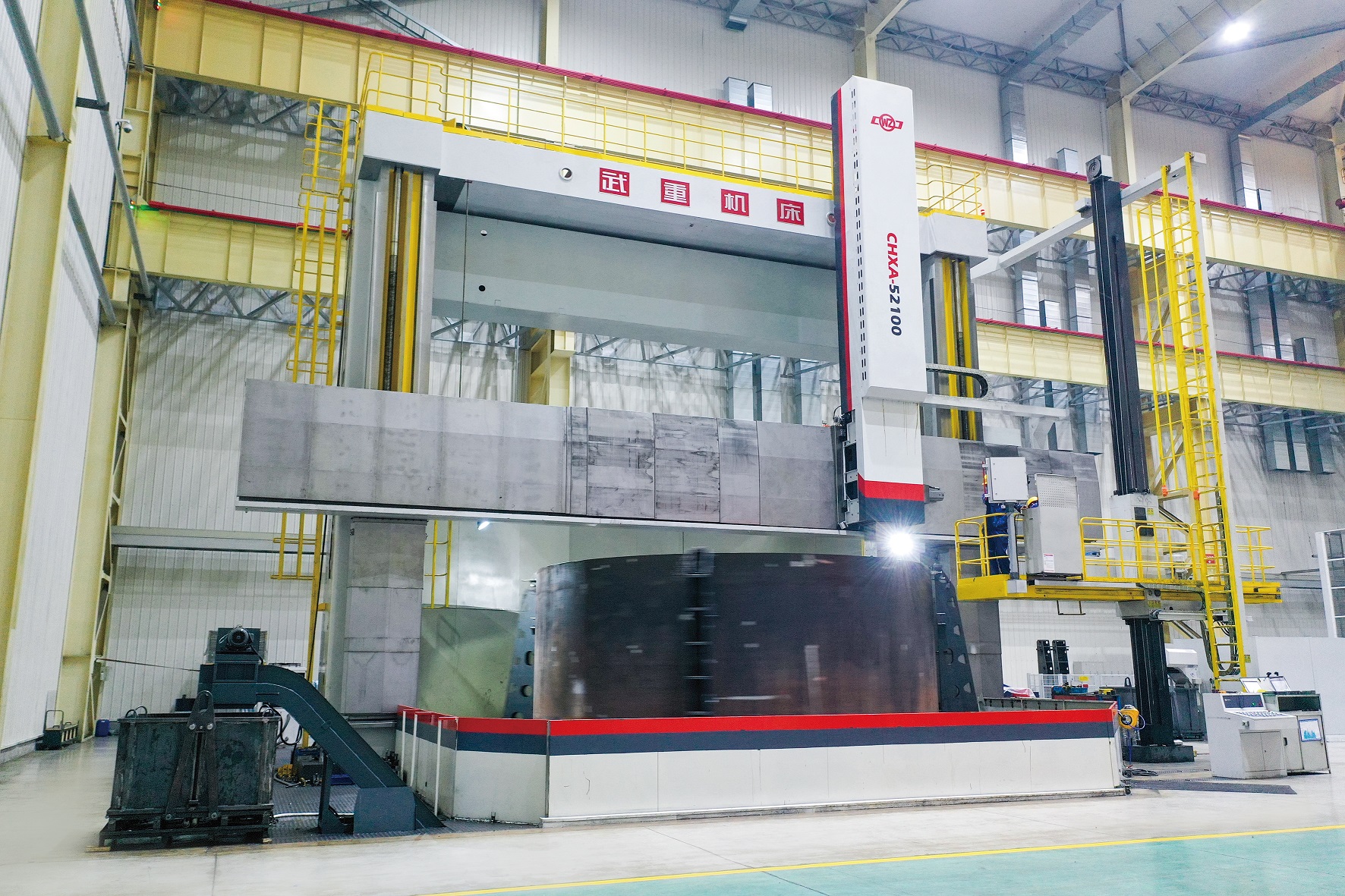
The Chinese group gallery names this machine “武重 CHXA-52100”; the photograph shows the same builder and model markings. The source presents it among manufacturing advantages alongside other installed equipment. It does not offer this model as a machine built or sold by the listed Himile company.
The retained directory page is an equipment reference with no invented performance table and no model-purchase RFQ. For manufacture of a component, agree the responsible plant, available equipment and inspection process. For purchase of this exact machine, obtain the actual builder’s current catalogue and build documentation.
Read the CHXA-52100 equipment reference ↗Send the scope and the acceptance task.
State whether the enquiry is for a complete machine, rotary assembly, mould or manufactured component. Add drawing/material, critical datum/features, loaded fixture or blank size/mass, batch mix and destination.
For equipment include the requested motion, control/interface, tooling and representative process trial. For manufactured parts include the blank-to-finish route, traceability and inspection requirements. Request the legal seller, actual build/manufacturing plant and the responsibilities for installation, integration or first-article acceptance.
Prepare a Himile RFQ ↗