

KRRASS · Sheet-metal equipment · Nanjing, Jiangsu
Size the sheet, then prove the cutting process.
A larger laser bed can fit a larger nest without adding laser power. Compare the supplied source, head and control, then measure the finished parts.
Three official RAS references and dated Nanjing project-identity material reviewed 8 October 2026
3015 and 6020 SMART: different sheet formats, the same listed power.
RAS-3015-3000W
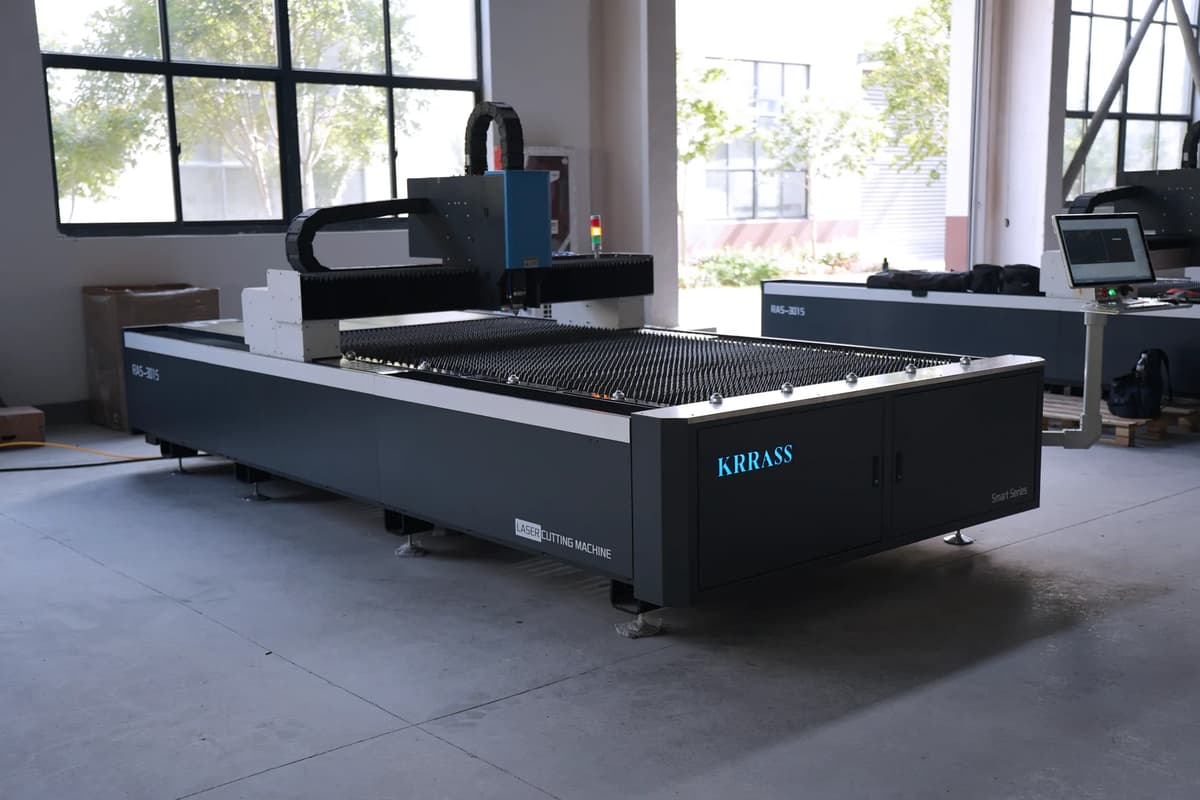
The exact page lists a 3000 × 1500 mm working area, 3000W laser and SKU RAS-3015-3000W-1. Machine size is 4500 × 2265 × 1900 mm and listed mass is 3600 kg.
RAS-6020 SMART
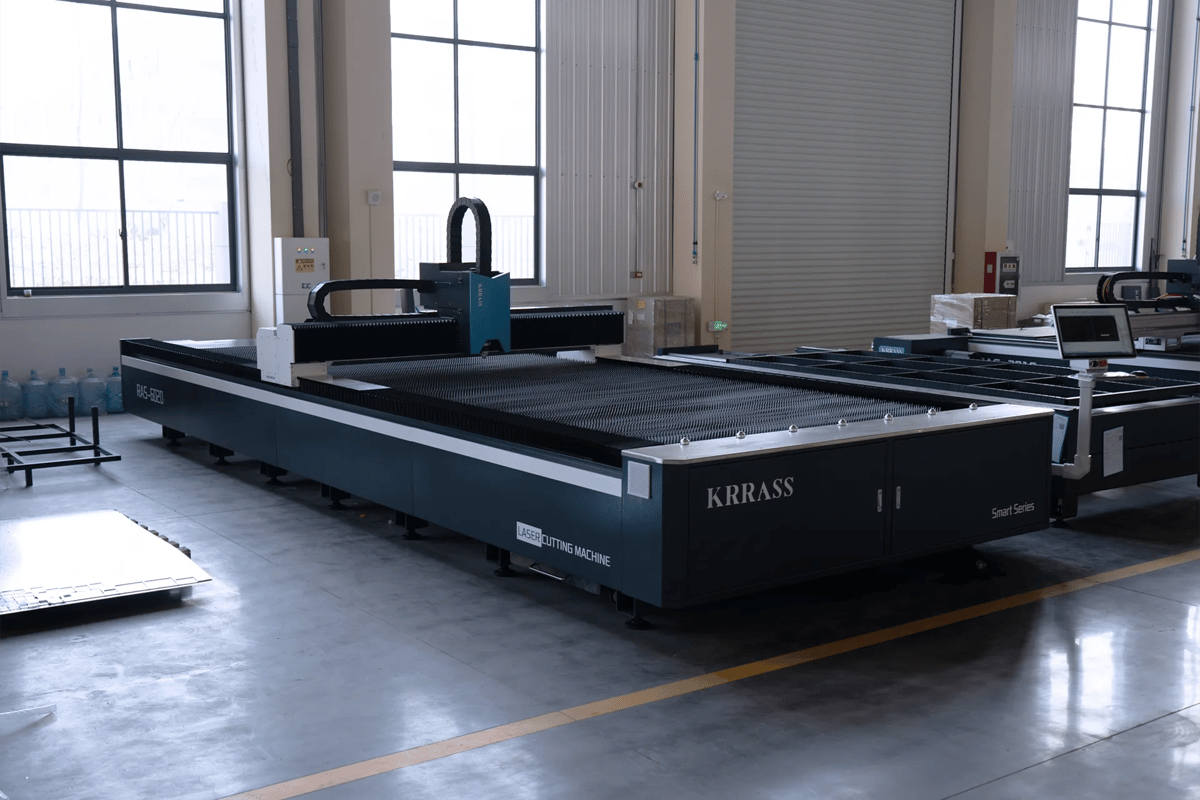
Its listed working area is 6000 × 2000 mm with the same 3000W power, SKU RAS-6020-SMART-3000W. Published machine size is 7500 × 2765 × 1900 mm and mass is 5500 kg.
Use actual sheet sizes, edge margins, clamps or supports, remnant reuse and the desired nest to choose a format. Check loading and finished-part handling as well as nominal working area. A longer bed may fit the sheet; it does not establish cut thickness, edge finish or a faster batch.
The source, cutting head and control belong on one build sheet.
Both 3kW pages identify a MAX MFSC 3000W source, BLT310 cutting head and FSCUT2000E control, with 380V / 50Hz operating supply. Those are the listed packages. Ask for the exact supplied revisions, chiller, extraction, assist-gas system, consumables and software/functions rather than relying on the RAS family name.
Specify each material grade, thickness, surface condition and edge requirement. Where gas selection, nozzle, focus or pressure changes the result, include those conditions in the trial record and utility schedule. Maximum laser power alone is not proof of cutting a particular material to the required finish.
For a mixed fabrication job, also define what happens after cutting: deburring, sorting, marking and bending or forming. KRRASS’s broader range includes press brakes, panel bending, shearing and rolling; those are separate equipment scopes. A laser quotation does not automatically include downstream tooling, automation or accepted bend quality.
Request a coherent 6020T revision before comparing it.
The retained RAS-6020T reference points to a 12kW page with SKU RAS-6020T-12000. Its table states 6050 × 2020 mm and “12000W,” but other content is inconsistent: the featured image is marked RAS-3015T and described as 6000W, and the prose gives a different bed-format description.
The conflicting photo is not reproduced here as a 6020T image. Request a model-marked current photograph, revision sheet and component schedule tying the enclosure, table, source, head, control and loading arrangement to the same machine. Identify which facts replace the conflicting web description.
The page’s motion and positioning figures are machine data, not accepted cutting speed or finished-part accuracy. An enclosed appearance does not by itself establish protective-window, guarding or extraction suitability for the actual laser package. Obtain the supplied safety documentation and have the responsible installation team review it.
Trial a representative nest, not only a straight cut.
Use the real material and features
Include small holes, slots, corners, long edges and the thinnest or most distortion-sensitive features. State required geometry, dross/burr, edge finish and permitted heat effect. Use the actual material condition and support arrangement.
Record the cutting recipe
Name source/head/control, nozzle, gas and supply conditions, focus, piercing and cutting settings. Include lead-ins, feature order, collision risks and part retention. Keep recipe changes and failed parts visible.
Measure released parts
Inspect after parts are removed under agreed datums, measurement and temperature conditions. Separate positioning data from dimensions, geometry and edge quality of the finished parts. Repeat the relevant mix rather than choosing one best sample.
Time the complete production loop
Include sheet loading, nesting/job preparation, piercing/cutting, unloading, sorting and relevant cleaning or rework. Record consumable and gas use for the trial. A traverse-speed or isolated cutting-speed figure is not the batch cycle.
Allow room and services beyond the bed.
Request the complete occupied layout, access zones, sheet-loading route, lifting/unloading method and installation drawing. The listed machine dimensions exclude assumptions about the extra space needed for stocks, chiller, gas supply, extraction and service.
Confirm voltage/frequency, electrical demand, assist-gas quality and pressure/flow, cooling, extraction and safe operating provisions for the actual configuration. Allocate foundation/handling, commissioning, operator training, documentation, recovery and destination service responsibility. Written order terms should define warranty and response scope.
Identify the legal builder behind the brand and quotation.
The current KRRASS company page describes a sheet-metal equipment brand and a Nanjing factory with bending, cutting, shearing, rolling and forming scope. This directory retains its Nanjing Krrass record. Confirm the present legal seller, actual builder/location and serial-machine documents on the quotation, including any affiliate or distributor involved.
A dated August 2025 Nanjing environmental-project intake names 江苏克劳斯机床有限公司 for a CNC-machine project in Gaochun. That is a project/company record, not proof of the current brand-to-contracting-entity correspondence, completed production or certification of these RAS models. Those distinctions remain part of the order review.
Send the sheet mix and an acceptance nest.
Include material grades and thicknesses, sheet dimensions, representative parts/nest, geometry and edge requirements, lot mix and downstream operations. Add gas/utilities, handling layout and destination service needs.
Name the proposed RAS build and ask for one matched component/revision schedule, actual builder and a released-part trial with complete-cycle boundaries.
Prepare a KRRASS RFQ ↗