

广东润星科技有限公司
Dongguan, Guangdong
Harvest Star: fit the loaded fixture, then choose the spindle.
Compare the HS-1066h linear-guide vertical centre with the HS-1690 door-type centre. Table load, column passage and sustained cutting duty matter more than the model number or headline speed.
Chinese and English company material and both original model tables reviewed 8 October 2026
A lighter loaded fixture or a larger mould block?
Harvest Star supplies drilling/tapping, vertical, horizontal, gantry, profile and related CNC equipment, together with automation solutions. The two references here address different milling, drilling, boring and tapping setups; they are a starting comparison, not the manufacturer's complete catalogue.
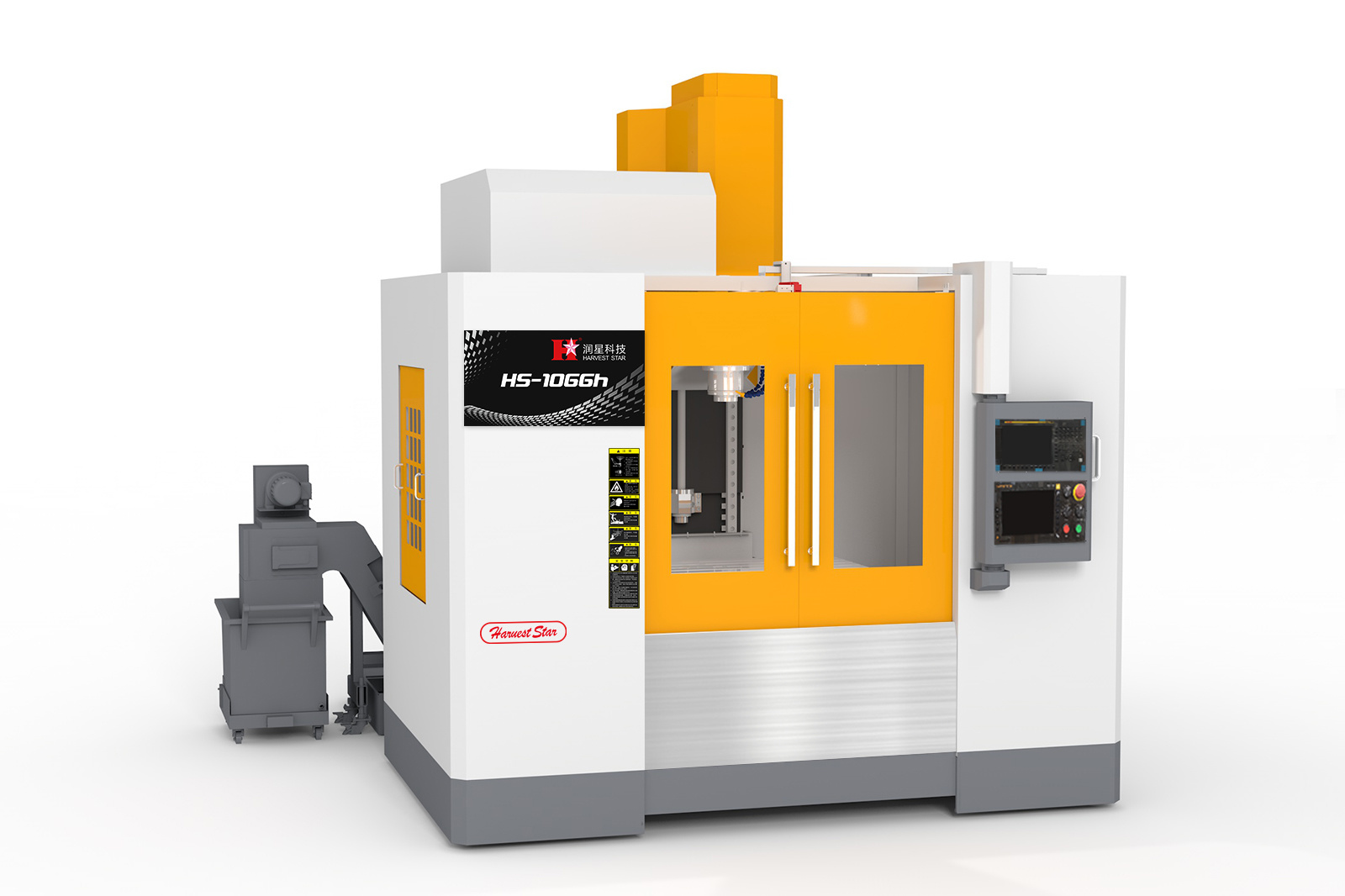
HS-1066h · linear-guide vertical centre ↗
Its 1200 × 600 mm table and 700 kg load reference suit a different fixture envelope from the heavier door-type machine. Start here for a plate, housing or mould setup within the confirmed travel and loading arrangement. The 12,000 rpm reference is relevant to a proposed tool/material process; it does not establish its cycle time.
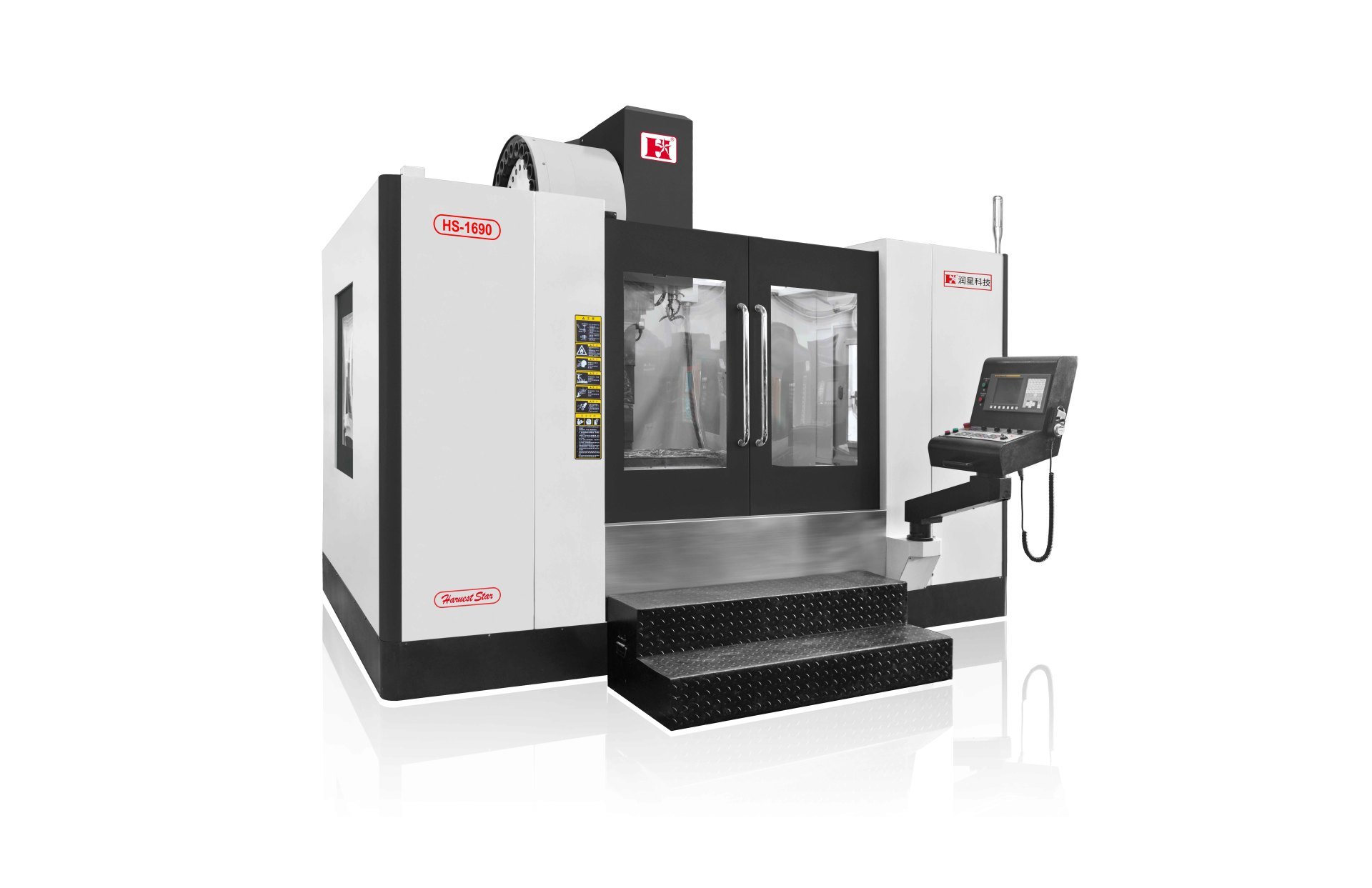
HS-1690 · door-type vertical centre ↗
The 1800 × 900 mm table, 2000 kg reference load and 1600 × 900 × 800 mm travel offer a larger mould/part route. Its two-column structure introduces a separate 960 mm passage check. The 6000 rpm and continuous-duty spindle data must be matched to the actual cutter and stock removal.
The fixture has to fit through the working space
On a small screen, swipe the model columns. The check label stays visible.
| Envelope check | HS-1066h | HS-1690 |
|---|---|---|
| X / Y / Z travel | 1000 / 600 / 650 mm | 1600 / 900 / 800 mm |
| Table and rated load | 1200 × 600 mm; 700 kg | 1800 × 900 mm; 2000 kg |
| Spindle nose to table | 110–760 mm | 180–980 mm |
| Additional clearance | Spindle centre to Z guard: 620 mm | Between columns: 960 mm |
| T slots | 5 × 18 × 100 mm number × width × spacing | 7 × 18 × 125 mm number × width × spacing |
| Rapid X / Y / Z | 36 / 36 / 24 m/min | 15 / 15 / 12 m/min |
For HS-1690, 960 mm is not a workpiece-width promise
Send the blank, clamp, stop, lifting and tool projection as one loaded envelope. Check its path between the columns, local cutter access and overhang through the full program. The 900 mm Y travel and 900 mm table width describe different features from the 960 mm column spacing; none establishes safe passage of every fixture of that nominal width.
For both machines, stack the Z requirement
Account for the fixture height, workpiece, holder and projecting tool at the shallowest and deepest operations. Check the spindle-nose window, approach, retract and tool-change positions. Rated table load includes the loading arrangement: establish the work/fixture/indexer mass and centre of gravity rather than assigning the whole rating to the blank.
Price the continuous cut, not just the maximum rpm
HS-1066h
- Speed reference
- 12,000 rpm
- Power · continuous / 25%
- 11 / 15 kW
- Torque · continuous / 25%
- 52.5 / 95.5 N·m
- Cutting feed range
- 1–10,000 mm/min
HS-1690
- Speed reference
- 6000 rpm
- Power · continuous / 25%
- 15 / 18.5 kW
- Torque · continuous / 25%
- 143 / 236 N·m
- Cutting feed range
- 1–6000 mm/min
The original tables label the second rating “25%”; they do not state a complete duty-cycle definition or speed–torque curve alongside it. Keep the continuous and intermittent figures separate. Ask for the delivered spindle curve at the proposed cutting speed and the permitted cycle duration/rest conditions. Maximum torque, maximum power and maximum speed are not necessarily available together.
For long roughing passes, confirm continuous output and cooling after warm-up. For small cutters and finishing, confirm holder balance, runout and the actual feed at corners. The rapid-traverse figure describes positioning, while the feed range and tool-change time are only parts of the complete part cycle.
Put the fixture, indexer and tool map in one proposal
The HS-1066h description offers four- or five-axis indexing tables. Specify rotary-table dimensions, mass, support, work height, clamp/unclamp sequence and control integration; an optional indexing table does not establish simultaneous five-axis machining or collision-free access to all faces. Recheck the 700 kg loading arrangement and nose-to-table window with the indexer installed.
24 positions are a tool map
Both references list a 24-position disc magazine; their descriptions name cam/arm change arrangements. Submit cutter, holder, overall length, diameter, mass and occupied adjacent positions. Confirm the actual spindle interface, magazine limits and change clearance on the offered build. The reviewed tables do not specify a taper or controller, so these belong in the written configuration.
Include the auxiliary sequence
HS-1066h describes an oil/water separator and enclosed machining space. Define the actual coolant/filter/mist-control and chip-removal package for the material. An enclosure or separator by itself is not proof of acceptable exposure, stable fluid temperature or unattended machining.
Run the fixture and part that make the choice difficult
HS-1066h: access across a loaded fixture
For a multi-feature plate or housing, use the intended fixture or indexer and representative material, blank allowance and tools. Test the furthest bore/pocket, clamp-adjacent feature and deepest approach. Include reorientation and measurement rather than timing only spindle cutting.
HS-1690: passage, roughing and released geometry
For a heavier mould or block, demonstrate loading and the complete fixture path, then the agreed roughing and finishing sequence with the delivered spindle curve. Check chip evacuation, tool approach, thermal conditions and overhang through the full stroke.
Use a part-specific acceptance sheet
Measure drawing datums, dimensions and finish after unclamping and under agreed conditions. Record warm-up, tool/holder revisions, program, coolant and inspection method. The published positioning/repeatability figures describe machine-axis tests; they do not guarantee every finished part's geometry. Count accepted parts over loading, cutting, changes, measurement and rejects.
Company identity and the installation package
The Chinese company introduction identifies 广东润星科技有限公司 as established in Dongguan in 2007; the English identity is Guangdong Harvest Star Technology Co., Ltd. The company describes Dongguan and Chongqing production locations, with 重庆新润星科技有限公司 identified as its Chongqing subsidiary. Confirm the contracting company and the manufacturing/delivery location for the proposed machine, together with destination-specific service and spare-parts arrangements.
A 12 March 2021 Dongguan People's Congress report records a workshop visit to 广东润星科技有限公司. This is a dated record of the company and its production activity, not a current certification, onsite audit by CNCVerified or acceptance of these two machine models.
Reference machine mass and outer dimensions differ substantially: HS-1066h is 6800 kg and 2800 × 3320 × 2980 mm; HS-1690 is 16,000 kg and 5100 × 3960 × 3440 mm. Obtain the actual transport, lifting, foundation and service-clearance drawings. Agree levelling, power/air/coolant requirements, commissioning, training, program/parameter backups, wear parts and the signed acceptance procedure. The external dimensions are not a complete installation footprint.
Send the loaded envelope and cutting requirement
Attach the drawing, material/heat treatment, blank allowance, part and fixture dimensions/mass, centre of gravity, clamp/indexer arrangement, column/guard clearance, tool map, required continuous cut, released-part tolerances and measurement method. Include output target and destination, then request the delivered spindle curve, control/interface, utilities and installation drawings.
Harvest Star RFQ ↗