

牧野机床(中国)有限公司 · Kunshan, Jiangsu
Makino China: plan the cut, the electrode and the handover.
Compare PS65 milling with EDGE3i sinker EDM around the feature the cutter cannot reach. Keep the machine configuration and manufacturing origin explicit.
Choose the process ↓Prepare a Makino RFQ ↗
China company and individual model references, regional configuration differences and a Kunshan public record reviewed 8 October 2026
What prevents the feature being milled?
A housing with accessible faces, holes and pockets can start with a milling assessment. A conductive mould insert with a deep rib, difficult internal corner or restricted cutter approach needs an electrode and discharge-process assessment. Sinker EDM is a different process, with electrode preparation, dielectric management and a burn sequence; it is not simply milling with a slower feed.
PS65 · accessible material removal
Check the cutter's approach, projection and chip path through the complete fixture. Select the spindle interface and duty for the roughing and finishing tools. A long tool needed to reach one corner may change the route even when the blank fits the table.
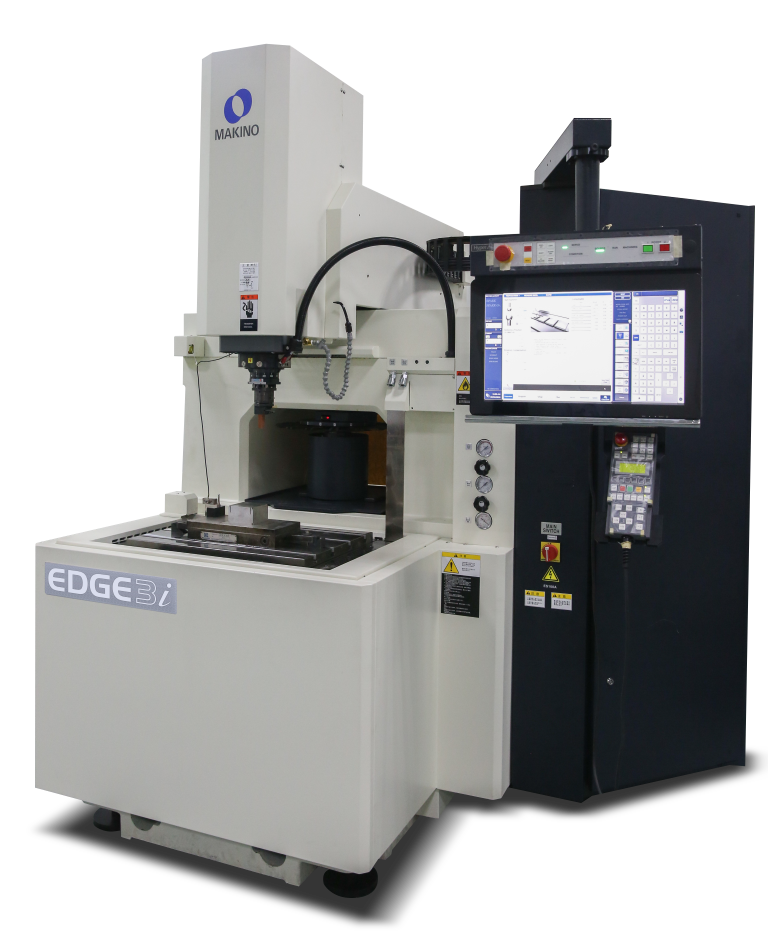
Read the PS65 reference ↗EDGE3i · electrode-controlled cavity
Send cavity geometry, workpiece material/hardness, electrode material and rough/finish electrode plan. Review spark-gap allowance, wear compensation, flushing and safe withdrawal. For a through contour made by wire, request a separate wire-EDM assessment; this sinker is not a wire machine.
Read the EDGE3i reference ↗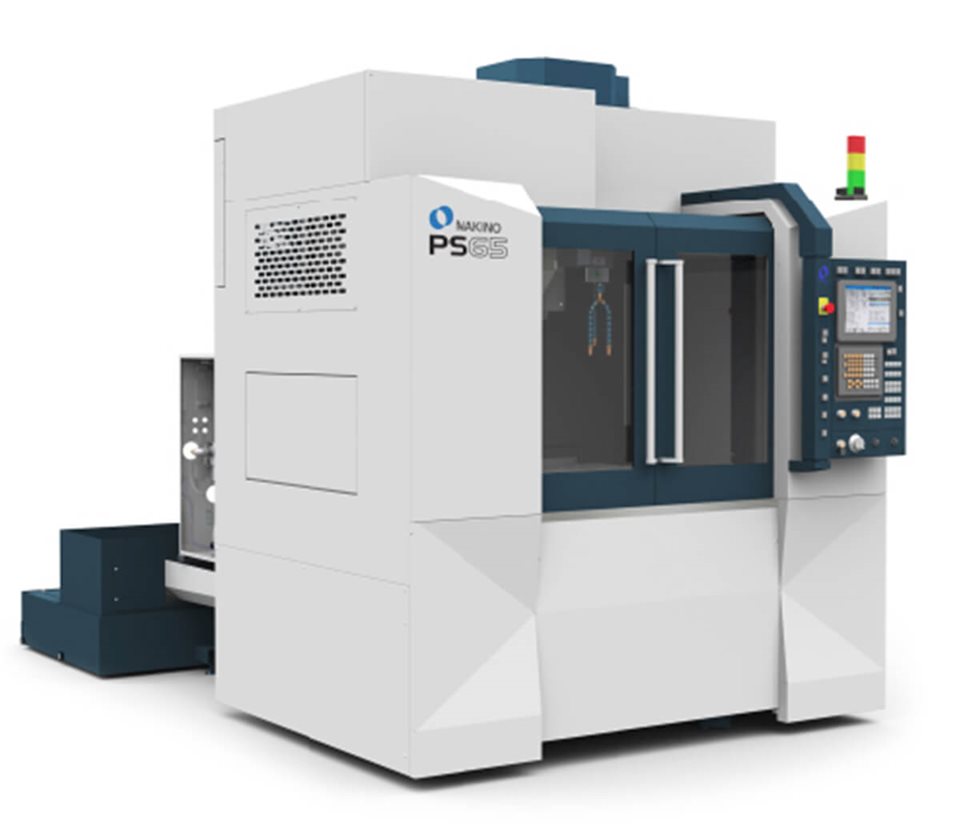
Fit the fixture and the working process, not just the blank
Swipe the comparison on a phone. These are China catalogue references, not interchangeable machining capacities.
| What to check | PS65 milling | EDGE3i sinker EDM |
|---|---|---|
| X / Y / Z travel | 660 / 510 / 460 mm | 450 / 300 / 320 mm |
| Table | 920 × 510 mm | 600 × 450 mm; stationary worktable |
| Process envelope | Fixture, holder and cutter approach; load limit to obtain | 800 × 550 × 350 mm tank; immersion and electrode clearance to check |
| Tooling reference | 30-tool ATC; 60-tool option; 8 kg tool-mass reference | 8-position electrode changer; 50 kg electrode-mass reference |
| Motion reference | 48 / 36 / 36 m/min X/Y/Z rapids | 5 m/min rapid; separate from erosion rate |
| Workpiece-mass reference | Not established by the reviewed individual page | 800 kg; fixture/support and distribution to approve |
For PS65, obtain the spindle-nose window, allowable table load and complete interference drawing before accepting a tall fixture. For EDGE3i, place the fixture, part, electrode holder and discharge position inside the proposed tank and axis arrangement. Tank dimensions do not define unrestricted workpiece size or maximum burn depth. Four-sided tank lowering improves access, but unloading, liquid level and safety clearances still need a cell layout.
Put the regional configuration on the quotation
- PS65 spindle and tool inventory
- The China page lists standard 8000 rpm/#40 and optional 14,000 rpm/HSK-A63. The optional speed belongs with its stated interface; do not order holders from the base package by assumption. Count roughing, drilling, tapping, finishing, sister tools and measuring assemblies before choosing 30 or 60 positions. Obtain occupied-neighbour diameter, holder length and mass limits. The page's 30 m/min cutting-feed maximum is not an achievable feed for every cut.
- EDGE3i control, generator and changer
- The China individual page describes MGH-6 with a 15-inch screen, 60A maximum power capacity and eight changer positions. The US page describes Hyper-i with a 24-inch screen, 80A available and 5/8/16 changer choices. These are separate regional references, not a combined specification. Request the delivered control/generator, software revision, electrode changer and manuals. IES/SuperSpark and finish technologies are manufacturer-described functions; they do not establish your cavity's cycle, electrode wear or metallurgical result.
- Cooling, chips and operating safety
- PS65 describes ball-screw core cooling, internal lubrication, nozzle/shower coolant and side augers. Confirm coolant delivery, filtration and conveyor scope for the actual chips; no pressure rating is inferred. EDGE3i describes a reservoir integrated in the base and a dielectric chiller. Its China page also lists a flame sensor and extinguishing system. Agree the delivered safety equipment, fluid specification, interlocks and maintenance procedure before considering unattended operation.
Accept the milled datum and the finished burn together
Define the milling handover
Identify which datums locate the part during EDM, what material remains for the burn and which features are finished by milling. Include the real fixture and longest tool in the PS65 trial. Inspect released geometry where clamping distortion matters, and record the datum transfer rather than relying on a machine positioning figure.
Define the electrode set
Approve electrode material, holders, offset measurement, rough/finish sequence and replacement strategy. Trial the deepest rib or least accessible cavity with the intended flushing and material condition. Record wear, corner geometry, surface texture and any specified recast-layer or metallurgical checks; a quoted finish function is not a part acceptance report.
Time the complete route
Include electrode preparation, setup, datum measurement, liquid handling, rough/finish burns, inspection and any secondary finishing. Define sample size, instruments and acceptance limits before the test. A successful isolated cut does not prove a stable unattended shift; review alarm recovery, fluid condition and electrode availability separately.
Kunshan manufacturing and the broader Makino catalogue have different scopes
The company page identifies 牧野机床(中国)有限公司 as established in Kunshan on 23 July 2002. It describes manufacturing, development, application engineering and China technical/service centres. Its stated Kunshan production scope includes EDGE/EDNC sinker EDM and U/UPX wire EDM. This is not evidence that every machining centre in the broader catalogue, including PS65, is made at that site. Confirm manufacturer, place of manufacture, contracting entity and destination supply route for the selected serial-number/build.
A 5 December 2025 Kunshan government notice names the exact China company and an EDM-production project at its Kunshan location. It records acceptance of an environmental-assessment submission for public review. It is not project approval, a factory inspection, proof of completed capacity or certification of EDGE3i.
The China company describes application support for process planning, fixtures and flexible automation, plus installation, maintenance, training, retrofits and spares. Obtain the actual destination team's scope, commissioning and training plan, software/control backup procedure and parts arrangement. A China service-centre list does not establish overseas attendance, response time or warranty coverage.
Send the part drawing and the electrode plan
Include part/fixture CAD, material and hardness, cavity/rib depth and corner requirement, milling datums and EDM handover, electrode material and rough/finish set, loaded masses, selected spindle/interface or EDM control/generator/changer, fluid/chip needs, finished surface and inspection limits, complete-cycle target, automation/safety scope and delivery destination. Ask for one coherent dated configuration and a representative combined-process trial.
Makino RFQ ↗