

Ningbo Kaibo CNC Machinery Co., Ltd.
Ninghai, Zhejiang
KAIBO DC-6060: choose the material process before the machine size.
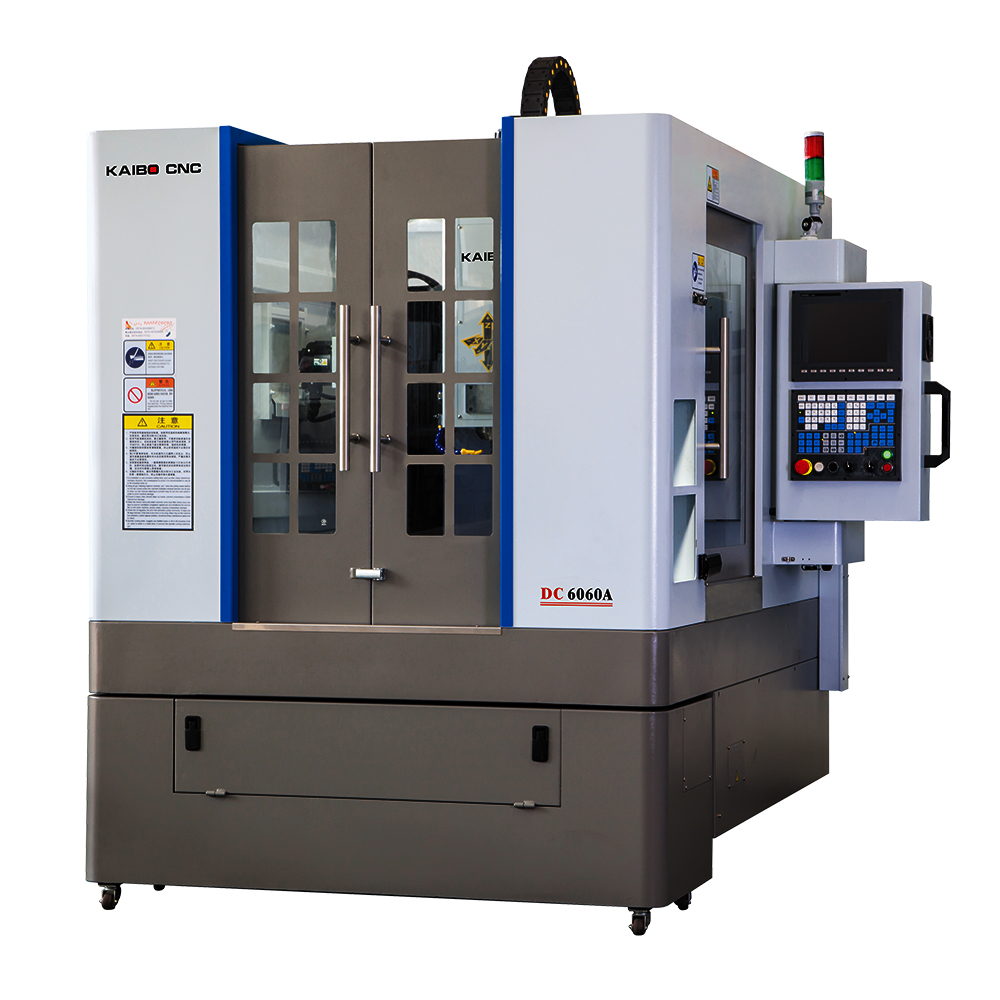
The shoe-mould DC-6060A and wet graphite DC-6060 share a 600 mm horizontal travel class. Their Z space, collets, tool-changing options and debris handling are different. Start with the material and the operation after machining.
Official company and exact model tables reviewed 8 October 2026
“6060” does not specify the same setup
Kaibo's company catalogue includes engraving/milling, machining centres, high-speed gantry milling and customised equipment. The two reviewed references are separate application configurations. Match the mould/electrode material, working height and debris process before selecting one.
| Configuration | DC-6060A shoe-mould reference | DC-6060 graphite reference |
|---|---|---|
| X / Y / Z travel | 600 / 600 / 260 mm | 600 / 600 / 360 mm |
| Table / rated load | 610 × 600 mm / 300 kg | 605 × 605 mm / 300 kg |
| Spindle / shank | ER25; 3.17–16 mm shanks | ER20; 3.17–12 mm shanks |
| Speed / power reference | 24000 rpm; 5.5 kW with 7.5 kW alternative | 24000 rpm; 5.5 kW |
| Tool changer | Optional: six-position linear or 20-position disc references | Optional: ten-position disc reference |
| Process to confirm | Material, mould cavity, cutter projection and spindle/ATC build | Wet cutting, spindle water curtain, filtration and downstream material preparation |
Swipe the comparison horizontally on a small screen.
For graphite, review the whole wet-processing loop
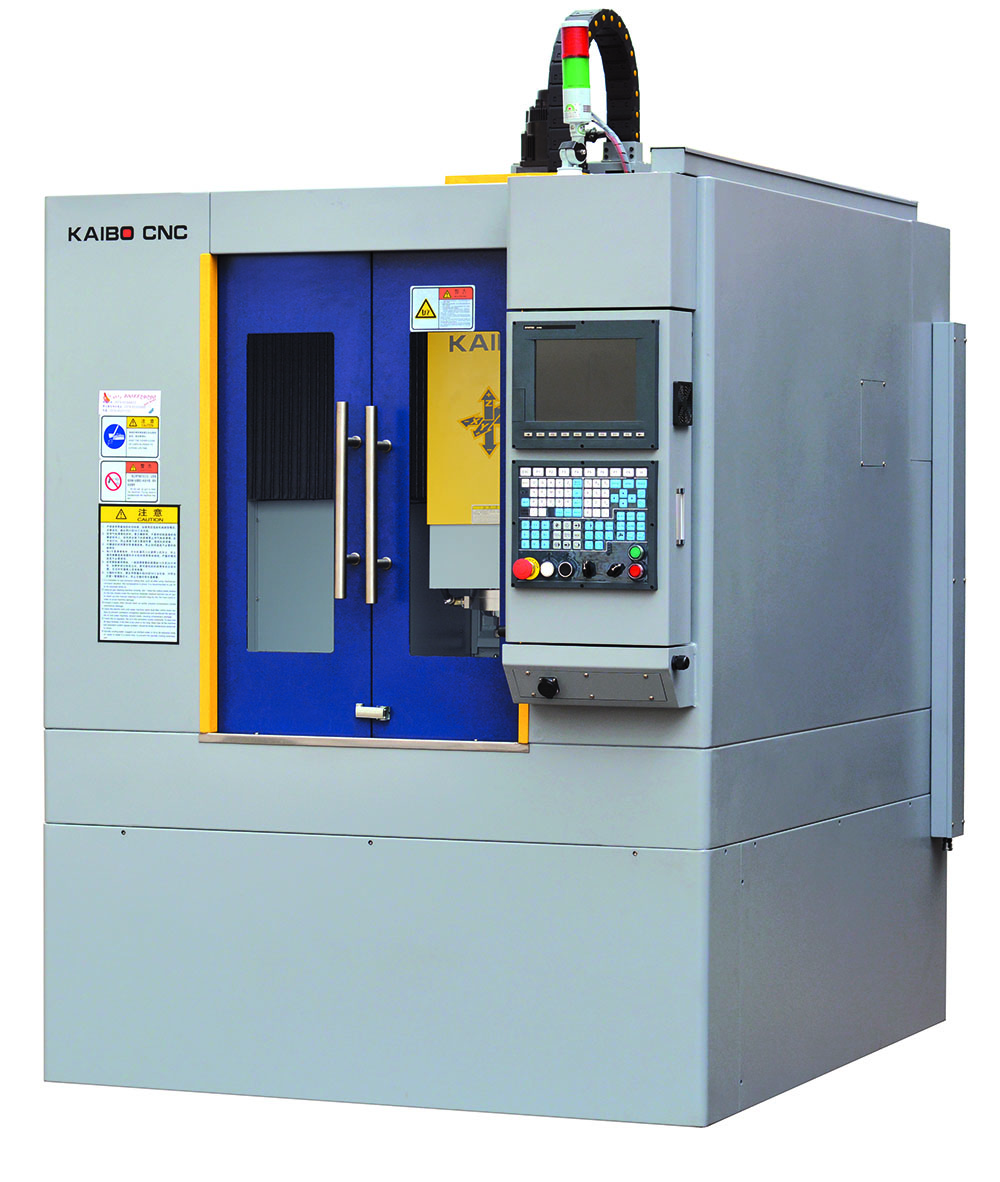
The graphite page describes wet cutting, a water-curtain device at the spindle, an enclosed machine, double telescopic axis covers and a dedicated graphite filtration system. This is a wet-processing reference; it should not be represented as a dry dust-extraction machine.
- At the cut
- Agree the graphite grade, liquid compatibility, tool and representative removal conditions. Ask for a trial showing the water curtain and enclosure through the intended cut and a tool change; the enclosure image alone does not demonstrate containment performance.
- Through filtration
- Identify the supplied filtration arrangement, maintenance access, liquid return and collected residue handling. Specify how the operator will recognise reduced flow or filtration problems and restore the intended process. Do not assume the system's capacity from a generic enclosure photo.
- After machining
- Agree cleaning, drying and inspection before the electrode or part enters its next operation. If wet processing conflicts with the buyer's material-preparation route, resolve that requirement before selecting this machine; a matching travel envelope does not settle it.
Fine features need a complete tool-and-holder drawing
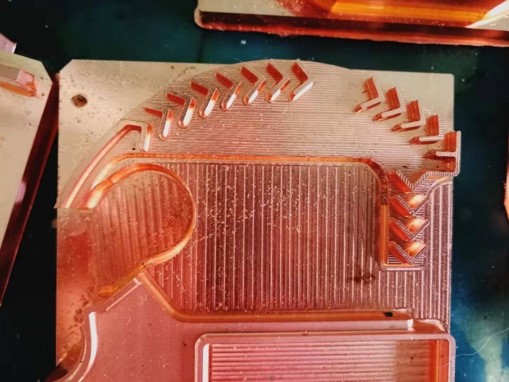
For a deep cavity, narrow rib or closely spaced detail, send the smallest radius, depth and approach direction with cutter and holder projection. ER25 and ER20 are different shank ranges; the largest permitted shank does not establish useful reach or rigidity for a long small-diameter cutter.
The DC-6060A table gives 130–390 mm spindle-nose-to-table distance, with a separate parenthesised 160–420 mm entry. Agree the actual build alongside its 5.5/7.5 kW and ATC alternatives. The graphite table gives 70–430 mm and 660 mm gantry width. Include fixture and support heights; do not turn Z travel into unrestricted mould height.
Both pages explicitly label the tool changer optional. Define manual or automatic tool changing, interface, magazine capacity, cutter limits and the control/program package. Six linear positions, 20 disc positions and the graphite machine's ten disc positions are different arrangements, not one combined magazine.
Accept the cut and the part's next use
Cut the difficult geometry
Use the intended mould/electrode blank, fixture, spindle, collet and longest small cutter. Include roughing, finishing, the smallest radius and deepest feature. Retain the CAM, program, tool and machine-configuration revisions with the trial.
Clean, release and measure
For the graphite route, use the agreed wet-process cleanup and preparation. Inspect the finished geometry after release, with instrument, datum, surface and temperature conditions defined. The model tables' 0.01 mm positioning/repeat-positioning entries are machine references, not a guarantee of every cavity or electrode dimension.
Include tools and the following operation
Run the required tool changes, replacement and restart. If the part is an electrode, agree the subsequent preparation and fit-for-use check; if it is a mould component, check the required cavity/surface and mating geometry. Count accepted parts, rejects, maintenance and operator work over elapsed time. A 24000 rpm spindle rating is not a finished-part output claim.
Request the inspection records for the ordered build
The company page identifies Ningbo Kaibo CNC Machinery Co., Ltd. in Ninghai, Zhejiang, distinguishing its 1994 engraving-workshop predecessor from the company established in 2003. It describes laser-interferometer, ball-bar and trial-machining checks. Request the actual machine's inspection records and the drawing-specific trial; those general methods do not establish that the buyer's part has passed.
The national standards platform's CNC engraving/milling revision record, plan 20250496-T-607, names the company among drafting organisations. Participation in standards work is not certification of either model or an independent factory audit.
The catalogue installation references also differ: DC-6060A lists 2200 × 1800 × 2200 mm, while the graphite machine lists 2030 × 1830 × 2430 mm; both list 4200 kg. Obtain the current layout with coolant/filtration, maintenance and handling clearances. Identify the legal supplier, delivered control/spindle/ATC, destination service, CAM/postprocessor, training and backup/consumable handover in the order.
Send the material and the narrowest, deepest feature
Attach material grade and condition; mould/electrode drawing and next use; smallest radius, depth and tool projection; fixture/blank mass and heights; selected spindle/collet/ATC; wet-process compatibility, cleaning and filtration requirements; accepted-part inspection, production mix, installation space and destination.
Send KAIBO RFQ ↗