

山东蒂德精密机床有限公司
Yanzhou, Jining · Shandong, China
DEED VL centres: fit the fixture, then choose the spindle.
Four reviewed vertical centres span BT40 and BT50 tooling. Compare the loaded setup and spindle-nose window before choosing table size, rpm or an optional rotary package.
Compare the four setups ↓DEED RFQ ↗
Official company, catalogue and model materials; dated Jining entity records · reviewed 8 October 2026
A part can fit the table and still fail the tool-access check.
DEED describes the VL range as a cross-slide vertical machining centre with linear rolling guides, for milling, drilling, boring, tapping and contour work on small and medium complex parts. The linked models below are four sizes within that range. Their larger tables do not provide identical vertical clearance or the same spindle interface.
Draw the complete loaded setup
Place the blank, fixture, clamps and any rotary table on a dimensioned layout. Check the feature coordinates against X/Y travel and the combined mass against the quoted table-load definition. A fixture extending beyond travel may support the work but cannot make an inaccessible feature machinable.
Check the lowest and highest tool positions
Compare table-to-spindle-nose distance with fixture height, the part datum, holder projection and tool length. Review the deepest bore and withdrawal above the tallest clamp. Z stroke alone does not establish that clearance; a longer column changes the setup and needs its own drawing.
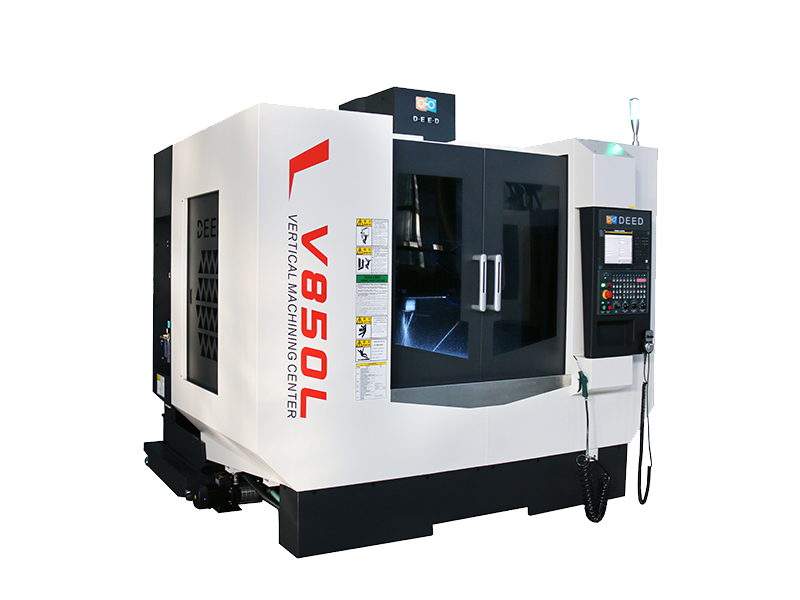
Swipe the comparison on a phone. Dimensions are the manufacturer’s published model columns; added fixtures and rotary equipment must be reviewed separately.
| Setup reference | V850L ↗ | V1160L ↗ | V1370L ↗ | V1690L ↗ |
|---|---|---|---|---|
| X / Y / Z | 850 / 510 / 510 mm | 1100 / 610 / 610 mm | 1300 / 710 / 710 mm | 1600 / 910 / 810 mm |
| Table dimensions | 950 × 500 mm | 1200 × 600 mm | 1400 × 700 mm | 1800 × 900 mm |
| Published table load | 500 kg | 1000 kg | 1300 kg | 1600 kg |
| Spindle nose to table | 150–660 mm | 150–760 mm | 150–860 mm | 150–960 mm |
| Spindle routes in this table | BT40 belt or direct | BT40 belt or direct | BT40 belt or direct | BT50 belt |
| Disc magazine | 24 positions | 24 positions | 24 positions | 24 positions |
For a long housing, compare the farthest bore positions and clamps before moving from V1160L to V1370L. For a heavier setup, V1690L changes both the reviewed load and the tooling interface. A larger model is useful only if the proposed fixture, tool approach and cutting duty remain compatible. Obtain table-slot, permissible load distribution and installation drawings with the quotation.
Choose one spindle build. Do not combine its best numbers with another.
The official VL table gives two spindle columns for V850L, V1160L and V1370L. The belt and direct-drive entries share the printed power pair but differ in speed and torque. V1690L has a separate BT50 belt entry. The table calls the pairs “rated / maximum”; it does not define a continuous or time-limited duty cycle.
BT40 belt · the listed 8000 rpm route
- Models
- V850L / V1160L / V1370L
- Power, rated / maximum
- 11 / 18.5 kW
- Torque, rated / maximum
- 69 / 156 Nm
For a larger cutter, boring tool or sustained cut, ask for the torque curve at the intended rpm and the permitted duty. The maximum torque and maximum speed are not a combined operating-point promise.
BT40 direct · the listed 12000 rpm route
- Models
- V850L / V1160L / V1370L
- Power, rated / maximum
- 11 / 18.5 kW
- Torque, rated / maximum
- 52.5 / 118 Nm
For small tools and contour work, compare the useful speed range, complete holder, cooling and finish on your material. Higher maximum rpm does not establish faster tapping, shorter full cycles or greater low-speed torque.
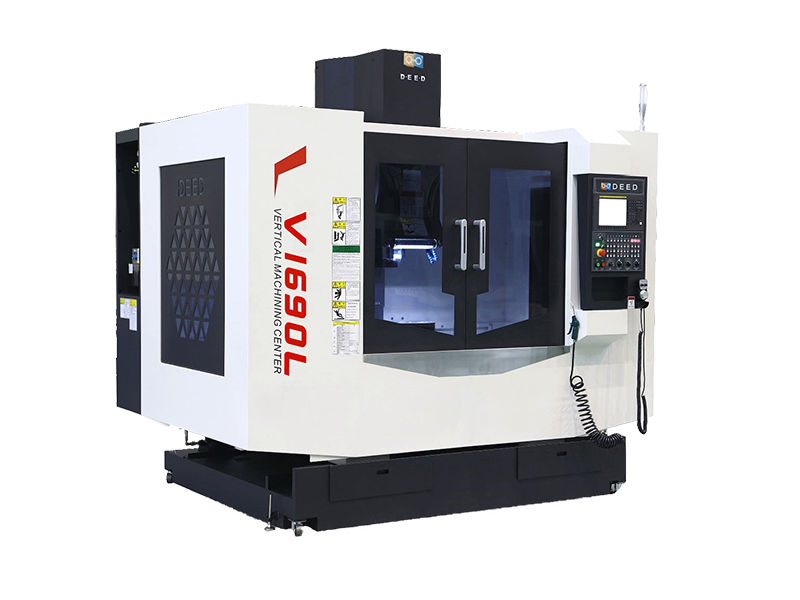
V1690L: BT50 changes the tool inventory
The published build lists 5000 rpm maximum, 11 / 15 kW and 168 / 305 Nm rated / maximum. Confirm the speed/torque/duty curve for the cut. Existing BT40 holders do not become compatible because the machine is in the same VL family.
Send the complete tool list, including boring heads, sister tools and occupied-neighbour requirements. All four reviewed columns list 24 positions, but permitted tool diameter, length and mass need the selected build sheet. A 30-position magazine is an option in the family list, not standard capacity to add to every record.
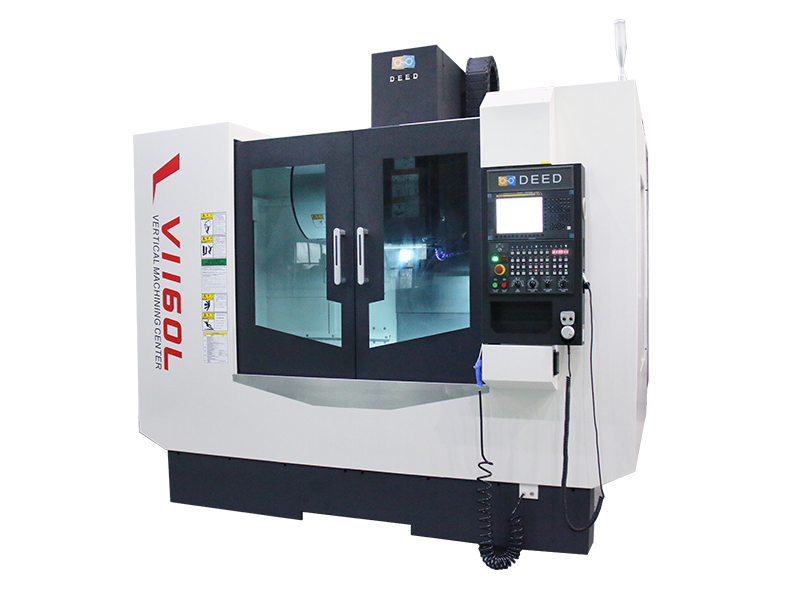
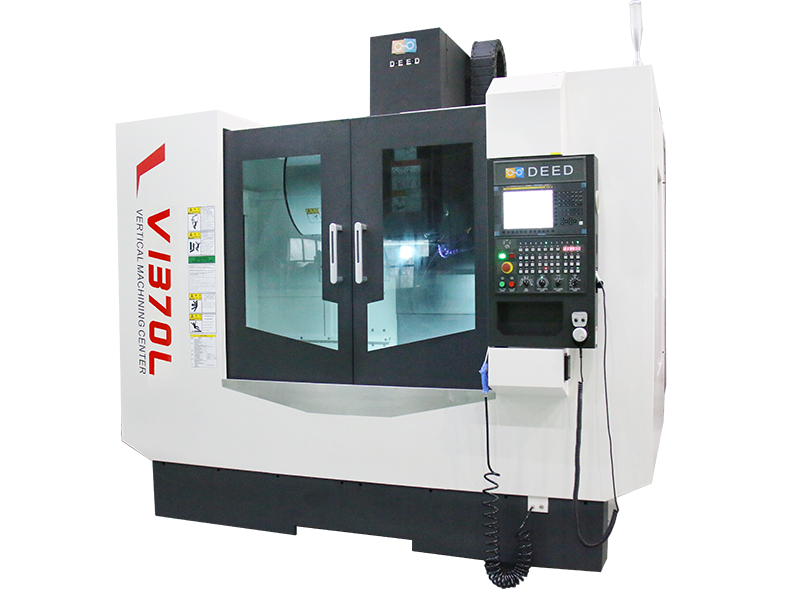
Quote the rotary, coolant and safety package as an integrated setup.
The standard list names a FANUC CNC without a precise version. Agree the installed control, enabled functions, programme transfer, probing/rotary integration and manuals. Column elevation, scales, workpiece measurement, tool setting/breakage detection, pneumatic doors and a door interlock are listed as options. The words “CE requirements” in an option menu are not proof that a selected machine is CE-certified: define destination conformity, supplied documents and the complete safeguarded configuration in the contract.
Accept the housing after it leaves the fixture.
Choose the feature that makes the setup difficult
Send material/condition, blank allowance, all datum faces, the deepest bore, most distant hole and tightest surface or position requirement. Agree fixture contact, clamp force and support. Use the proposed spindle, tools and coolant to machine the feature; a short unloaded-axis demonstration cannot prove the cut.
Measure the released part
Specify the measuring equipment, datum establishment, thermal conditions and sampling. Inspect bore position, mating-face relationship and flatness after unclamping where the drawing requires them. If another face uses a rotary or a second fixture, measure the datum transfer as part of the same trial.
Repeat the complete sequence
Include loading, tool changes, probing, chip clearing and inspection in the timing. Repeat the relevant production batch with the intended tool-life and offset policy; agree recovery from a stopped cycle. No cycle time, material-removal rate or finished-part accuracy is inferred from the catalogue’s rpm and travel.
Record the exact model, spindle drive, control version, rotary/fixture, coolant package and tool list in the trial report and purchase scope. Define which checks repeat after installation, with foundation, electrical supply, air, coolant, service access and local operator training ready.
A Shandong manufacturer; the selected machine still needs a build-specific contract.
DEED’s company materials describe an integrated CNC machining-centre business with development, production and sales in Yanzhou, Jining. Its catalogue separates VL vertical centres from gantry, milling/boring, five-axis, drilling/tapping, turning and automation categories. This page examines the four linked VL records; it does not assign their spindle ratings or installation needs to the wider catalogue.
The Jining industry bureau’s 17 November 2025 digital-transformation pilot enterprise list records 山东蒂德精密机床有限公司 in Yanzhou. This dated entity reference is not a machine certificate or an independent acceptance test. A separate April 2026 municipal school report names Shandong Deed among a 2025 intelligent-manufacturing education partnership; it does not establish the service offered to your destination.
Ask for the legal contracting entity, manufacturing location, delivered model/revision and responsible installer. Identify commissioning, operator/maintenance training, warranty response, local support and critical spares for the destination. Separate the basic machine from rotary integration, CAM/postprocessor, fixtures, probes and conformity documents so each has an accountable supplier and acceptance result.
Send a loaded-setup drawing with your DEED RFQ.
Include part/material and condition; blank, fixture and clamp dimensions/mass; critical features and datum; required tool approaches; BT40/BT50 holders and spindle duty; belt/direct preference; rotary and control functions; chip/coolant needs; released-part acceptance; batch/changeover target; installation utilities and destination. Ask for one coherent build sheet and a trial on the difficult feature.
DEED RFQ ↗