

HISION · Ningbo Haitian Precision Machinery Co., Ltd. · Ningbo, Zhejiang
Choose the workholding direction before the machining centre.
Top-face fixtures, multi-face housings and gantry access create different problems. Compare the build that solves yours.
Current official families, dated exhibition reference and August 2026 issuer identity reviewed 8 October 2026
Three routes to the same difficult feature.
| Workholding problem | Family to investigate | Evidence needed for the offered build |
|---|---|---|
| A plate or compact part approached mainly from above | VMC II; a rotary table is an option for additional faces | Loaded fixture height, axis reach and nose/tool clearance; rotary sweep if added |
| A housing with several side faces or deep features | HII / HII-D horizontal centres | Tombstone/pallet envelope, spindle reach, tooling and chip evacuation; any W arrangement |
| A wide fixture or mould requiring a gantry route | Small GU(e)HS or a separately qualified larger gantry | Clear opening, loaded height, ram/tool reach, table travel and the exact spindle package |
Swipe on a phone. A family name identifies a route to investigate; it does not establish every model’s numerical envelope.
HISION’s official range also includes turning and boring/milling equipment. This profile concentrates on the vertical, horizontal and small-gantry choices represented by its seven retained machine URLs. Use the difficult feature and the loaded fixture to narrow a route before comparing speed, axis count or model suffixes.
VMC850II: a dated numerical reference, not a combined maximum.
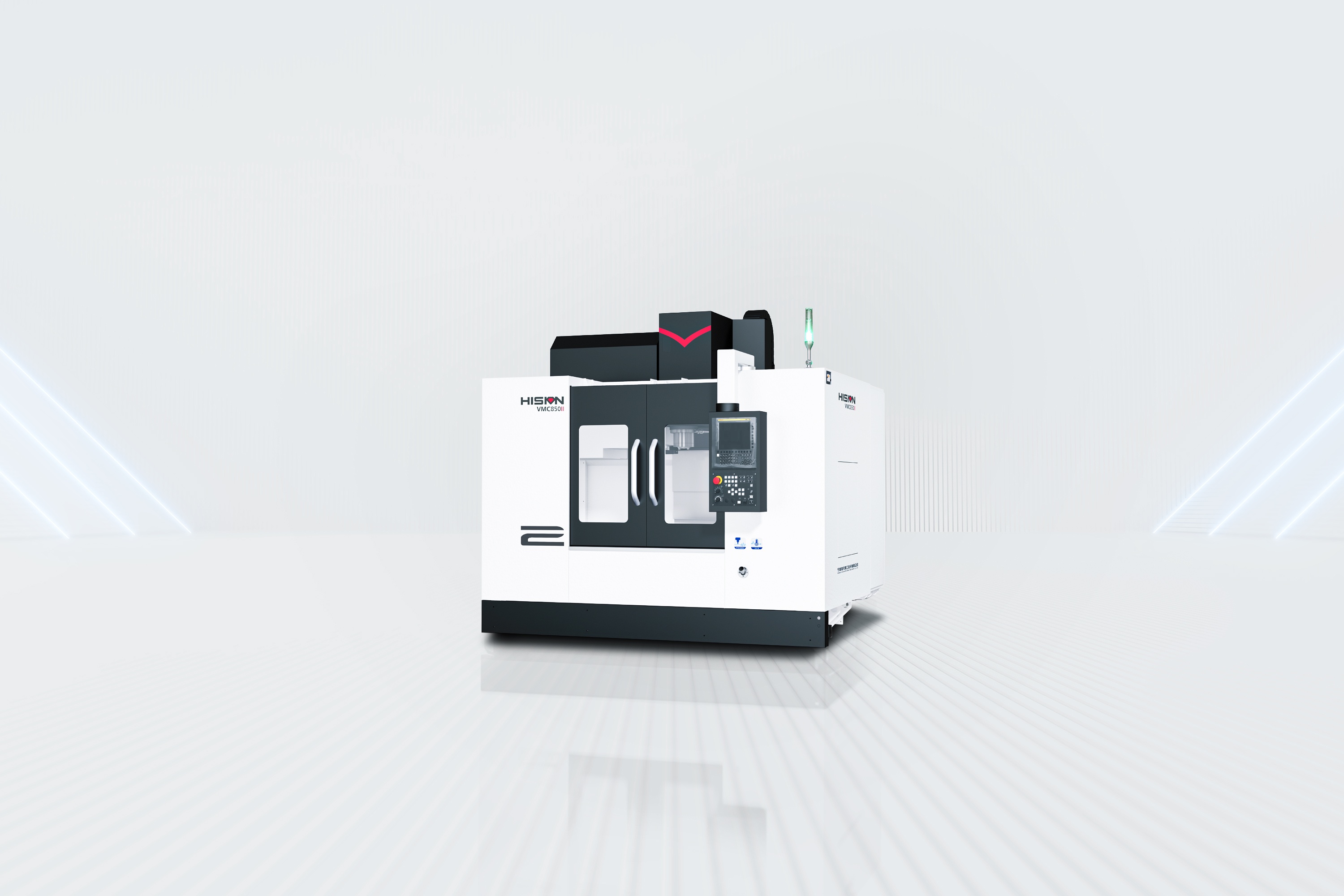
The manufacturer’s 2023 EMO presentation identifies VMC850II with X/Y/Z travel of 850/500/500 mm and a 600 kg maximum table load. It lists a 12,000 rpm internally developed motor spindle as optional. Retain that date and option condition when requesting a current build; do not add this spindle to every 850 or II-series configuration.
The current VMC II page describes a wide-span bed/column structure and an optional rotary table for multiple faces. Draw the part, clamps, fixture height and tool-holder approach inside the quoted travel and clearance. Include the fixture in the load check, and establish where the spindle must cut; table area and travel are different limits.
The retained VMC850HS and VMC1200II need their own revision and build sheets. A current “HS PLUS” family label is not proof of the older HS specification, and the 850II figures are not a source for a 1200II table or spindle.
A horizontal route changes fixture access and chip removal.
The current HII-HII/D description identifies a T-shaped bed, gantry-style column and a two-stage geared main transmission. Its detailed family material also describes a W-axis function, 535 mm travel and 130 mm diameter. Those are family-level statements: confirm whether the exact offered H63II or H100II includes that arrangement before assigning the figures to it.
Start with the housing, tombstone or fixture in each machining orientation. Check pallet attachment, load and centre of gravity, the furthest bore or face, supported reach and tool-changing clearance. For an extending spindle, include the required extension and tool projection in the cut trial rather than treating nominal W reach as equal rigidity at every position.
The manufacturer describes several chip-removal arrangements. Specify the real material, chip form, coolant and required complete-cycle sequence, including clearing and loading. A horizontal orientation may help a process, but it does not prove unmanned running or a pallet-change package that has not been quoted.
GU5II, GU6II and current GU5HS are not one build.
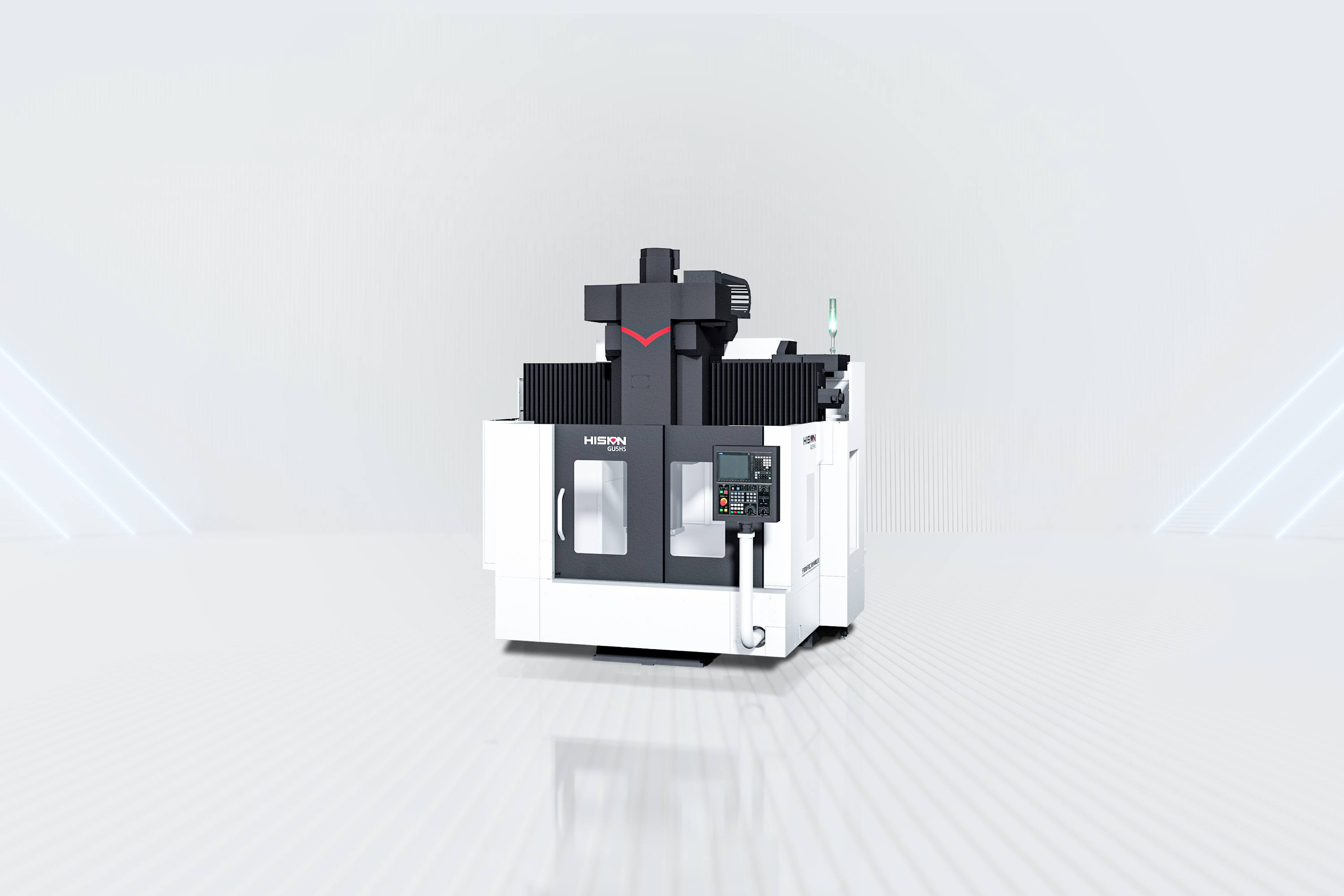
The current GU(e)HS material describes an integrated gantry frame with the table moving inside it, a ram guideway structure and a motor-spindle variant for GUe HS. Its detailed page describes a 24-tool magazine as optional. A separate 2023 exhibition reference concerns GUe6II PLUS, not the retained GU6II record. Neither source makes these features standard on an older II machine.
For a mould or wide fixture, provide the loaded width/height, required cutting coordinates and the longest tool. Check the opening at clamps and at the actual ram/tool position, table stroke, head access and loading route. Establish the supplied spindle torque/duty and tool package for the operation, with attachments and magazines identified individually.
Run the setup that is hardest to support and clear.
One coherent build
Record exact model, suffix/revision, spindle, controller functions, magazine, feedback, workholding and coolant/chip package. Keep standard items, alternatives and paid options separate.
The difficult cut
Use the real material and loaded fixture. Include the furthest face, deep feature, long tool or ram extension, and the orientations that threaten clamp clearance. Record tool, coolant, thermal and support conditions.
A repeatable complete cycle
Measure the released parts against agreed datums, geometry and finish. Include loading, tool changes, chip clearing and interventions in the cycle record. Repeat the representative work rather than selecting only a best result.
The delivered installation
Agree handling/access, utilities, occupied floor space, service clearances, documentation, training and recovery. For automation, add guarding, interfaces and responsibility for the complete cell.
Identify the precision-machine company and the build location.
The August 2026 issuer summary identifies 宁波海天精工股份有限公司, Shanghai-listed stock code 601882, with its office in Ningbo Beilun. The current company page describes five domestic manufacturing bases: Ningbo Dagang, Ningbo Yanshan, Dalian, the mountain factory and South China. These are the manufacturer’s statements, not an independent inspection of the machine you will receive.
A broad Haitian group identity is not a substitute for the quotation’s legal seller, manufacturing base and destination service provider. Request the serial machine’s inspection/build records and the agreed cut report. Historic exhibition configurations, current family pages and the actual delivered specification should remain distinct.
Send the fixture and the hardest feature.
Include drawing/material, required faces and datums, part plus fixture mass, loaded width/height, critical cutting coordinates, longest tool and finish/inspection requirements. Add lot mix, complete-cycle boundaries, installation access and destination.
Identify the exact retained model or proposed current series and ask for one coherent revision/build sheet, standard/option schedule and a trial that proves the difficult feature with the supplied package.
Prepare a HISION RFQ ↗